

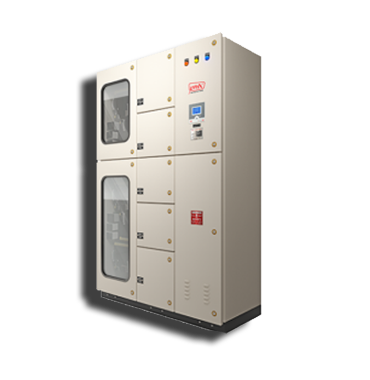
An Active Harmonic Filter (AHF) is an advanced power electronic device used to eliminate harmonic distortions from electrical systems. It detects and cancels harmonics in real time, ensuring the delivery of clean power to sensitive or critical loads.
Harmonics are generated by nonlinear loads, such as variable frequency drives (VFDs), uninterruptible power supply (UPS) systems, printers, computers, and industrial drives. Without proper filtering, they can cause overheating, malfunctioning of equipment, and increased energy costs.
The main purpose of an active harmonic filter is to
Active Harmonic Filters operate by utilizing advanced power electronics and digital signal processing to monitor the load current in real time. When harmonic distortion is detected:
Unlike passive filters, AHFs are dynamic, accurate, and capable of responding to variable loads instantly.
| Parameter | Details |
|---|---|
| Voltage Rating | 400V / 415V / Custom |
| Current Capacity | 25A to 600A or as per load |
| Compensation Capability | Up to the 50th harmonic order |
| Switching Frequency | 10 – 20 kHz (typical) |
| Response Time | < 1 ms |
| Control Type | DSP-Based Real-Time Control |
| Cooling | Air-cooled or forced air-cooling |
| Compliance | IEEE-519, IEC 61000-4-7 |